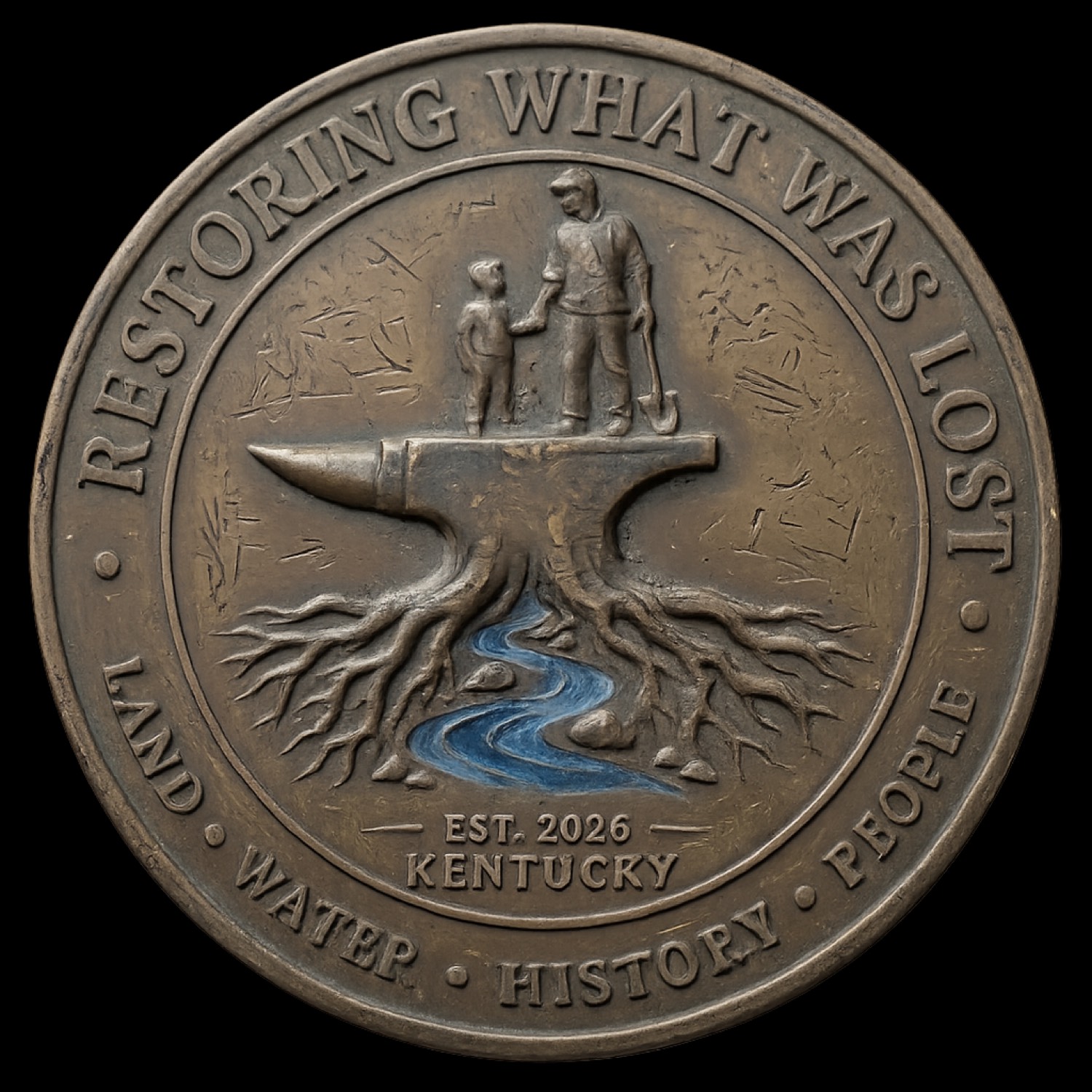
Built from field work. Organized to outlast any one person.
Restoration needs more than effort. It needs permissions, records, governance, and people trained to carry the work forward.
Return neglected places and knowledge to public use.
Restoring What Was Lost, Inc. organizes charitable, educational, and scientific work that restores neglected land and waters, strengthens rural households and communities, preserves local history and culture, and teaches practical stewardship through field work, research, media, and public programs.
Vision
Rural communities where neglected land, damaged waterways, forgotten buildings, and disappearing local knowledge are met with organized care instead of resignation.

The visible problem was rarely the whole problem.
Family-run property restoration work repeatedly uncovered needs that ordinary commercial work could not carry: elderly or disabled owners without enough labor, public waterways with no single customer, neglected historical evidence, and cleanup requiring many organizations to cooperate.
A serious health crisis also made one fact unavoidable: public restoration could not depend on one person’s physical strength. The field had already revealed the mission. The turning point forced the mission to become a durable system.
Pactolus & Sons LLC remains the family business. Restoring What Was Lost, Inc. holds charitable and public-benefit work under separate governance, accounting, and mission criteria.
The rules that protect the mission
Restoration before replacement
Ask what can be made safe, useful, visible, or remembered again.
Dignity in direct service
People receiving help are partners, not material for pity or promotion.
Evidence before assumptions
Photos, maps, permissions, and field notes guide decisions.
Public benefit first
Projects advance charitable purposes rather than private business interests.
Education through work
Every appropriate project should leave knowledge or a reusable method.
Continuity by design
Records, procedures, partnerships, and trained people are deliverables.
Responsibility must be visible.
The corporation is designed for board oversight, conflict review, separate financial records, documented related-party decisions, regular reporting, and written project standards. Leadership and governing documents can be added here as the founding board formally approves them.
Formed as a Kentucky nonprofit corporation in July 2026. Federal 501(c)(3) recognition is separate and should not be implied before approval or written fiscal sponsorship.