Little Sandy River Stewardship Project
Know what is here. Know where it is. Build the record needed to act.
A river cannot be managed from scattered memories.
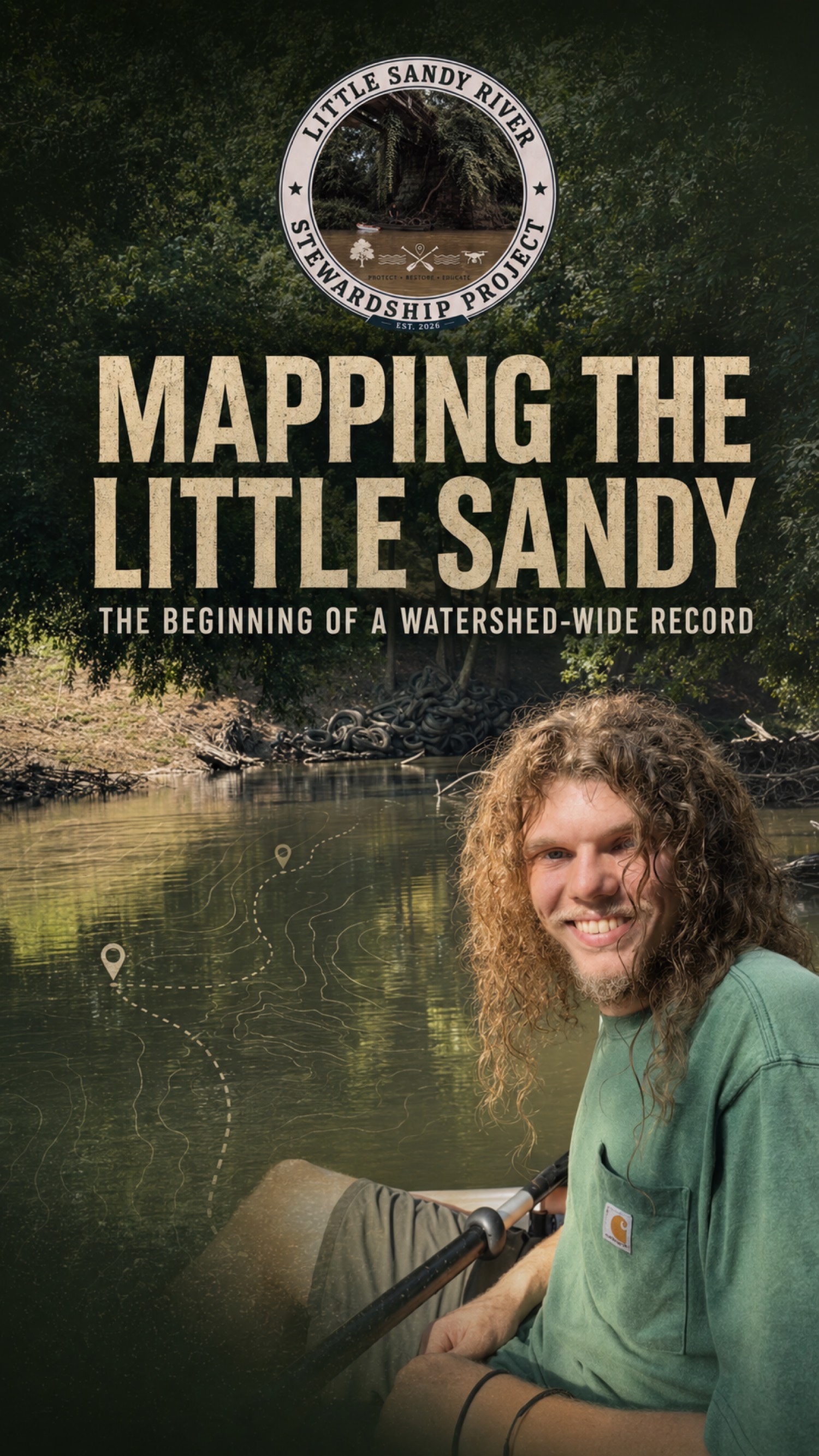
The project is documenting the Little Sandy corridor from Grayson Lake toward the Grayson water intake. Field work records obstructions, tires, dump sites, access points, erosion, historic features, and other conditions that affect the river and the people who use it.
The immediate work is cleanup and access. The lasting product is a shared record strong enough to support planning, grants, education, research, and long-term stewardship.
The river as a connected system
Obstructions and access
Logjams, portage hazards, launch points, public access, and difficult sections.
Waste and recovery
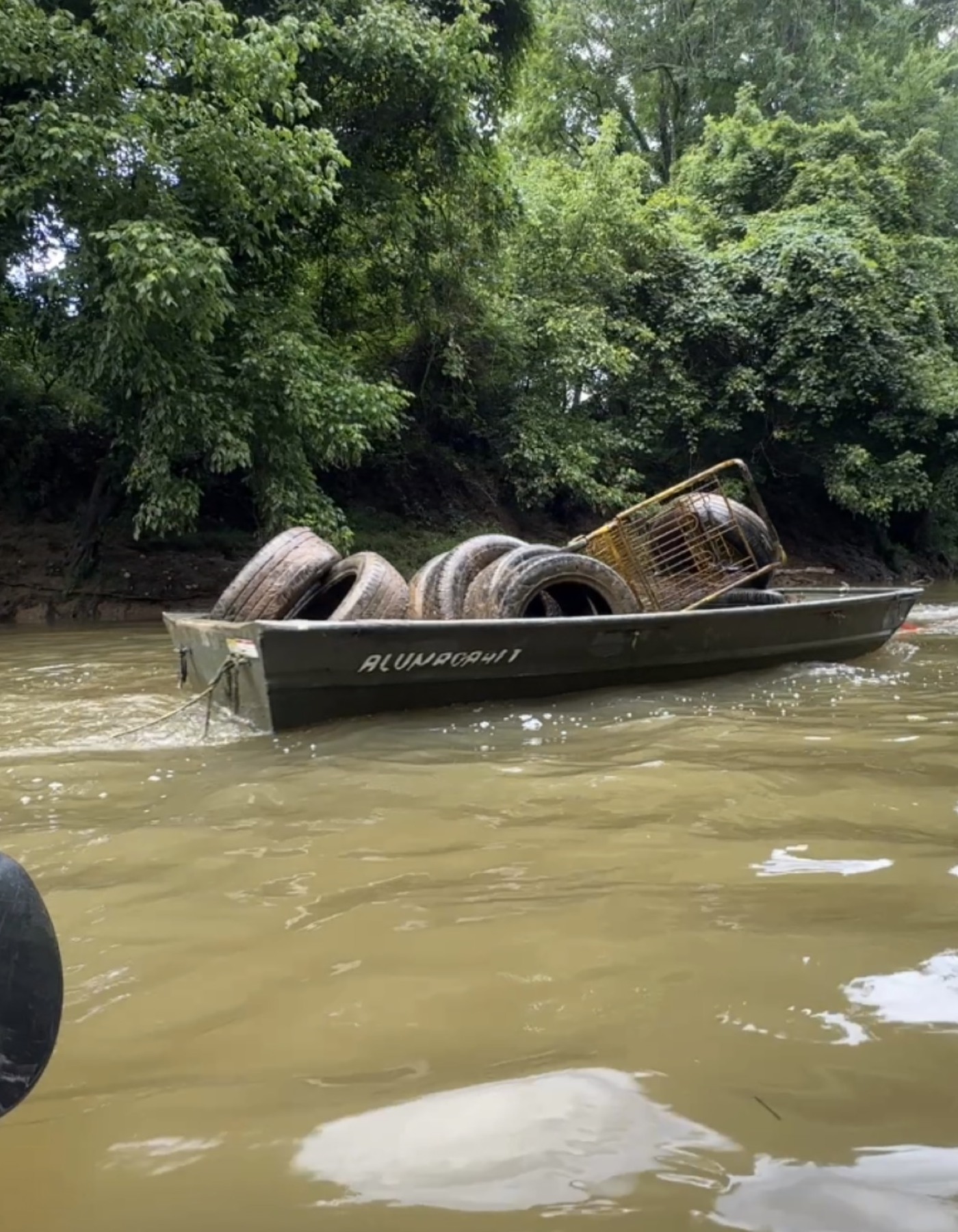
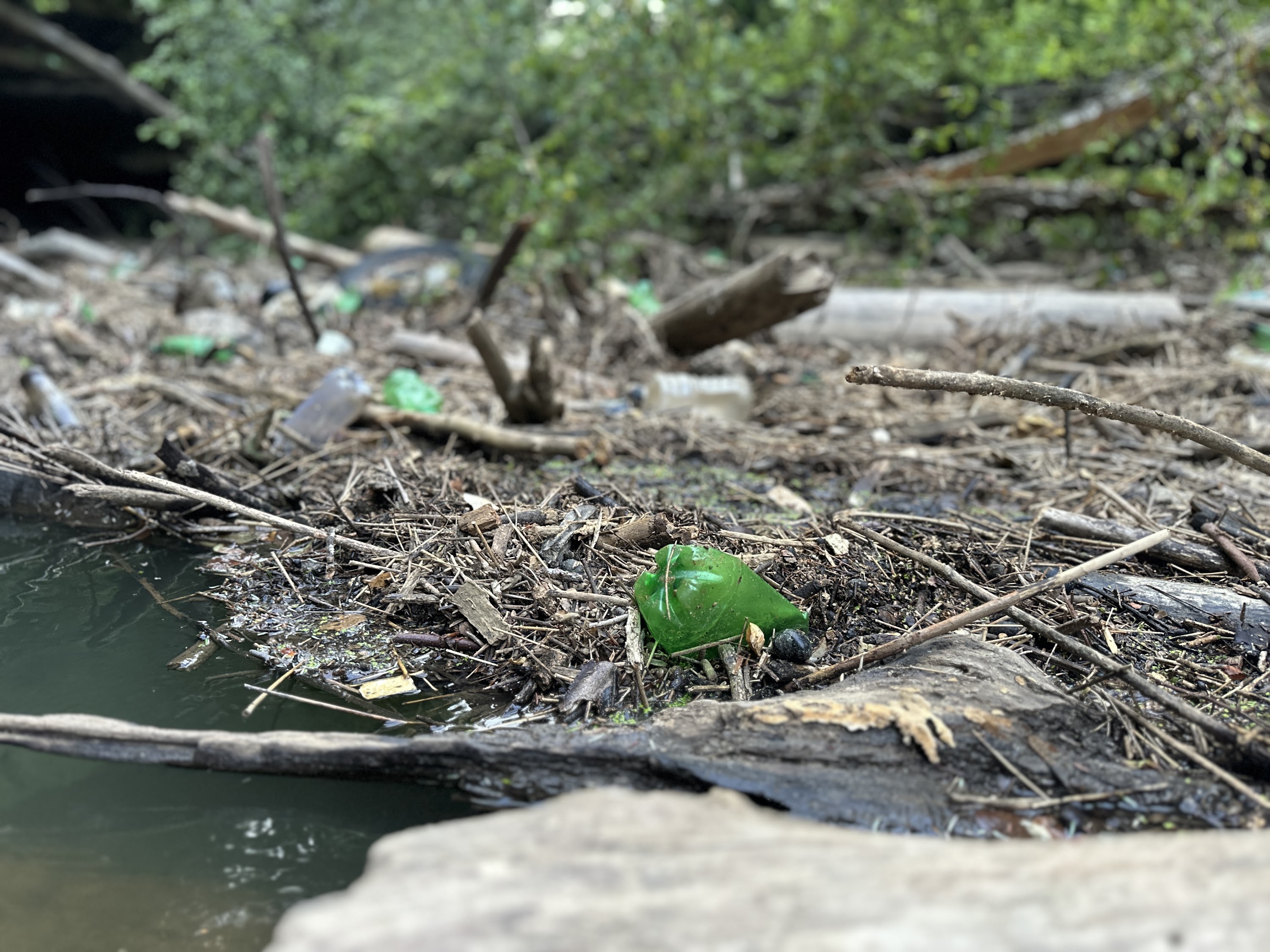
Tires, appliances, metal, containers, dump concentrations, and removal logistics.
Water and banks
Erosion, sediment, high-water movement, bank conditions, and locations needing study.
History and infrastructure
Railroad bridges, old industry, river crossings, community memory, and altered flow.
Every site moves through the same basic record.
- 01
Observe
Photograph, locate, describe, and identify immediate hazards.
- 02
Verify
Determine access, ownership, permission, partners, and safe scope.
- 03
Act
Remove, open, stabilize, or refer the work according to capacity.
- 04
Close the record
Document results, remaining needs, disposal, follow-up, and lessons.
Hidden waste does not disappear.
Material concealed beneath water or brush can move again during high water. Obstructions can turn ordinary recreation into dangerous portage. Missing records leave each agency, landowner, and volunteer starting over.
This project is built to replace scattered concern with a usable public record.
Field labor is only one part of river work.
Document
Photographs, GPS points, written observations, and historical records.
Recover
Boat support, loading, sorting, disposal, and safe field assistance.
Research
Historic maps, land records, industry, infrastructure, and oral history.
Equip
PPE, fuel, trailers, disposal, printing, cameras, and field supplies.
Partner
Technical review, training, permits, data, facilities, and public outreach.
Grahn and Little Sinking Creek.
Karl Bernhard Grahn tells a story of Grahn and Little Sinking Creek through Karl Grahn, the working brickyard, underground mines, and the generations of families who shaped the community. The film is from Kirk Memorial Baptist Church.
Watch the Grahn documentaryWatch the work on the Little Sandy
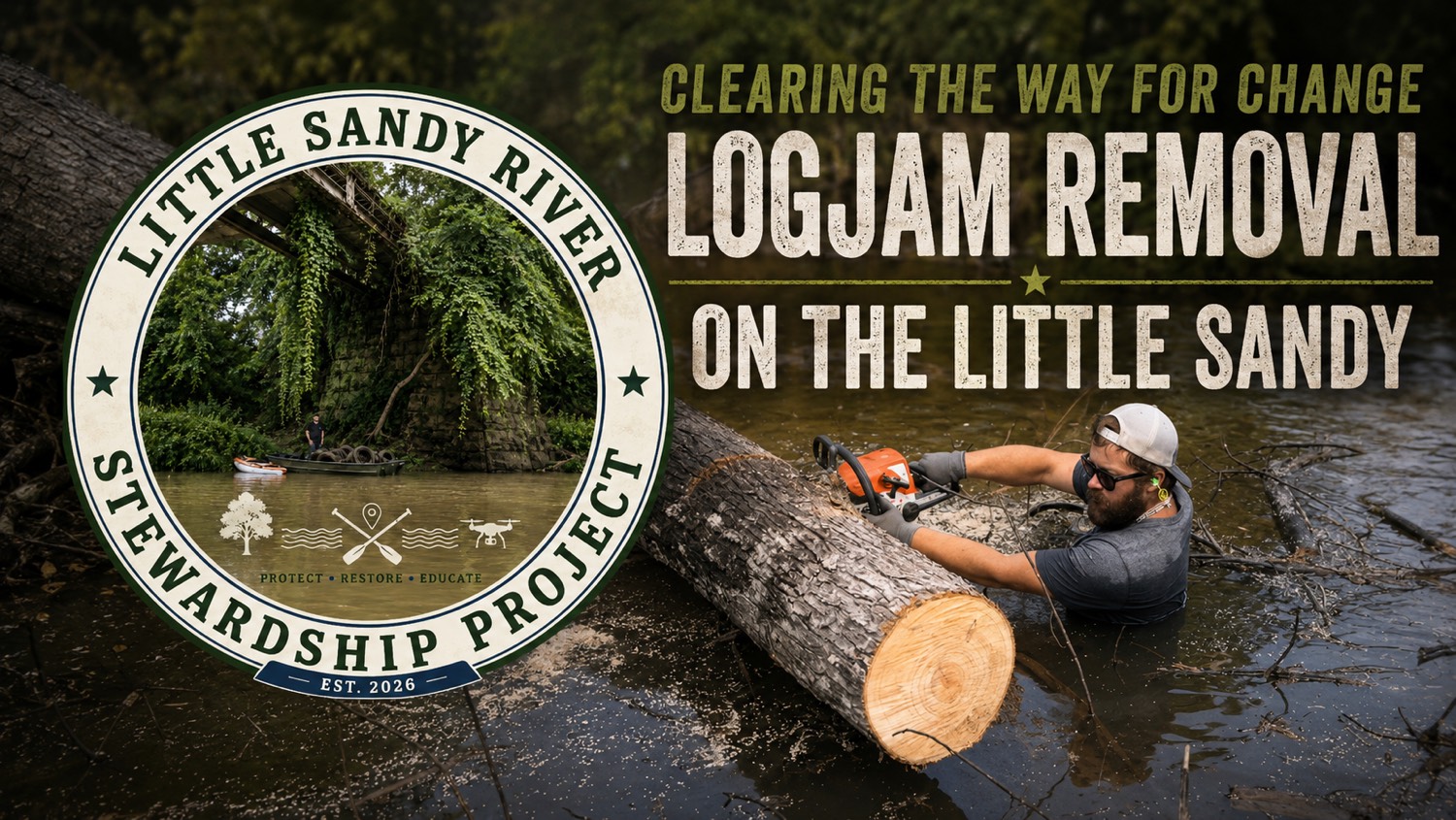
Two short films that show how the corridor is being mapped, cleared, and turned into a permanent public record.