Argillite Furnace
Argillite · Greenup County, Kentucky
Discover why water power and charcoal did different jobs in an early iron furnace.
Picture the working place.
Read each picture like a page from an old schoolbook. Match the numbered labels with the notes below, then compare the scene with the photographs and records.
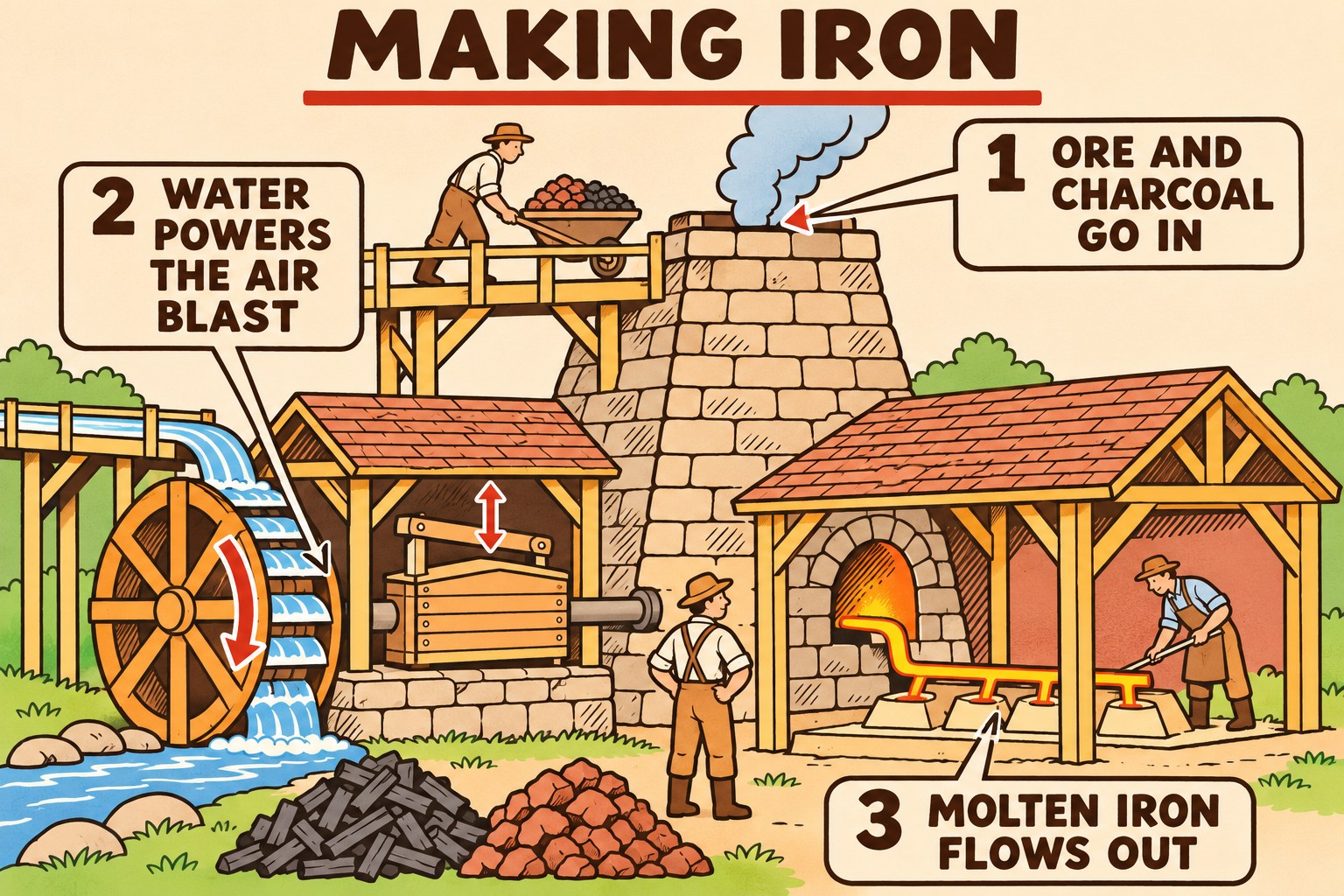
A charcoal blast furnace: making iron
A representative charcoal blast furnace smelts iron from ore. Workers feed the stack from above and tap molten iron below. This scene explains the process; it is not a reconstruction of Argillite Furnace.
Open full illustrationLook for
- Ore and charcoal go in. Workers bring materials to the top of the stack.
- Water powers the air blast. The wheel provides motion; charcoal supplies the heat.
- Molten iron flows out. Find the channels beneath the casting shed.
Modern AI-generated educational illustration. Created by the Restoring What Was Lost History Workshop.
Historical reference: National Park Service: ironmaking at Hopewell Furnace
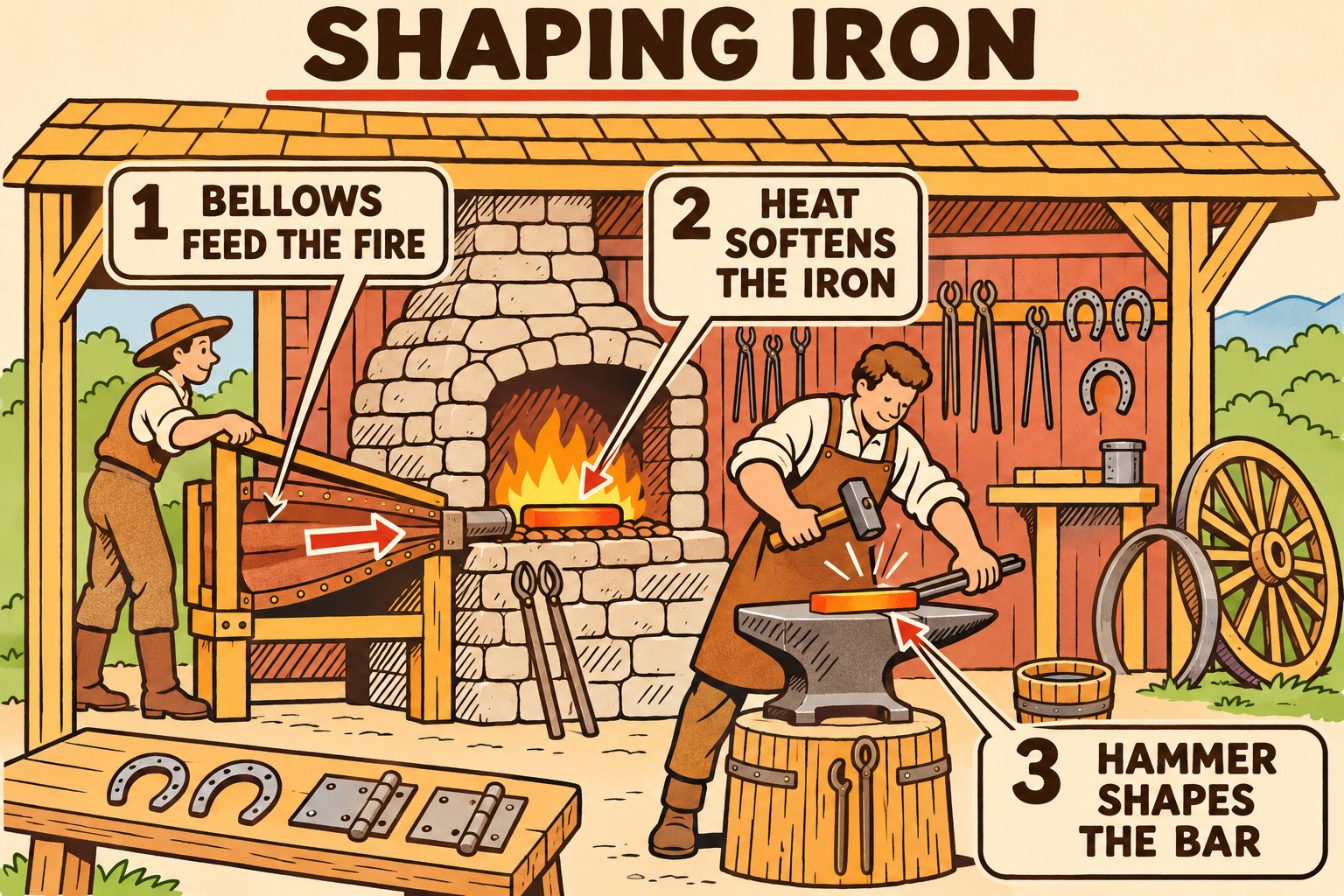
A blacksmith’s forge: shaping iron
A blacksmith reheats and shapes iron already suitable for forging. Raw pig iron first needed further refining. This representative workshop illustrates that different job; it is not a reconstruction of a documented shop at Argillite.
Open full illustrationLook for
- Bellows feed the fire. A stream of air helps the hearth burn hotter.
- Heat softens the iron. The glowing bar is hot enough to shape but remains solid.
- Hammer shapes the bar. The anvil supports the iron while the smith works.
Modern AI-generated educational illustration. Created by the Restoring What Was Lost History Workshop.
Historical reference: National Park Service: Hopewell’s iron industry and workshops
See the place.
Read the date and caption with each image. Historical photographs and modern aerial views show different parts of the story.
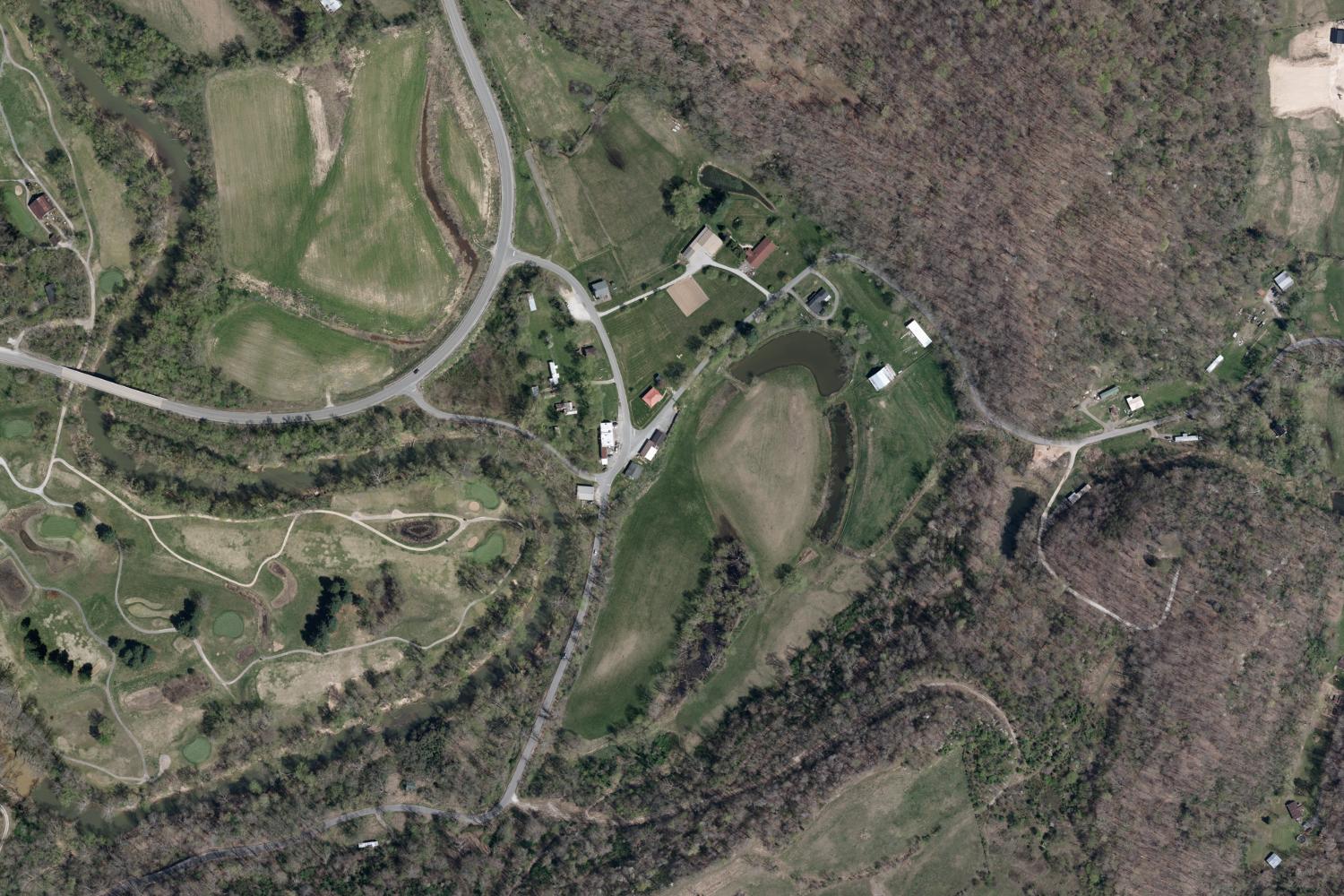
The Argillite community and surrounding landscape from above. This photograph provides geographic context, not an identified view of the lost furnace or its foundations.
KyFromAbove, Kentucky Division of Geographic Information. Imagery source ↗ · CC0 imageryFind the place.
This map locates Argillite as a community. It gives the furnace story a geographic setting while research continues on the original structure’s exact position.
Loading the location map…
Argillite community · area reference
A community reference point near the Little Sandy. The original furnace footprint and the historical marker’s precise position have not been verified for this map.
GNIS-derived Argillite place record ↗Pins identify the place described in each label. A historical marker or community pin may be separate from the original building. These are research locations, not confirmed visitor entrances.
Start with the record.
Kentucky’s historical marker dates Argillite Furnace to 1818 and names John and David Trimble and Richard Deering as its builders. Its stone stack rose 25 feet. Charcoal supplied fuel, while water drove the air-blast machinery. The marker records its last blast in 1837. It was an iron-smelting furnace, not a blacksmith’s forge.
Based on Kentucky Historical Society: Argillite Furnace, marker 975; National Park Service: refining iron at a forge.
A few moments in the story.
- 1818
An early iron furnace
Kentucky’s marker dates its construction to 1818 and names John and David Trimble and Richard Deering as the builders.
Kentucky Historical Society, marker 975 ↗ - 1837
The last blast
The marker records the end of furnace operation in 1837. Water power drove the air supply; charcoal provided the heat.
Kentucky Historical Society, marker 975 ↗ - 1880 Census
A later record preserves details
The U.S. Census iron-industry history describes a furnace on the river’s left bank, built into black slate. Its earliest-date account differs from the state marker, a useful reminder to compare sources.
1880 Census iron-industry history, printed p. 99 ↗
If charcoal provided the heat, what did the water do?
Use this explanatory drawing to investigate the idea. Choose an observation below the picture.
Choose a way to look closer
Water: provide motion
Point to the wheel. Trace its connection to the air-blast machinery.
Water power operates machinery. It does not replace the furnace’s fuel.
Notice. Sketch. Ask a better question.
Choose one prompt for a family conversation, or use all three as a classroom investigation.
Use three colors to mark water, air, and fuel on your own diagram. Explain what each contributes.
Write a sentence correcting this claim: ‘The river heated the furnace.’
Compare a gristmill and a furnace. How could both use water power to do very different work?
The lesson PDF pairs teaching notes with learner pages. Allow around 45 minutes for discussion and the activity, adapting the pace to your group. Model building, when chosen, takes additional time.
Download lesson: Argillite Furnace: three kinds of workRead the sources.
Compare what a source says with what the diagram shows. Record uncertainties instead of filling them with guesses.
- Kentucky Historical Society: Argillite Furnace, marker 975
State marker account of the furnace, water-driven blast, charcoal fuel, and dates.
- National Park Service: refining iron at a forge
Explains forge work, helping distinguish it from the blast furnace’s task of smelting.
Help fill in the picture.
A family photograph, an old plant map, or a memory with a name and date can help us understand this place more clearly. Tell us what you know and where the information came from.
Share a history lead →Keep the connections going.
Created by the Restoring What Was Lost History Workshop.